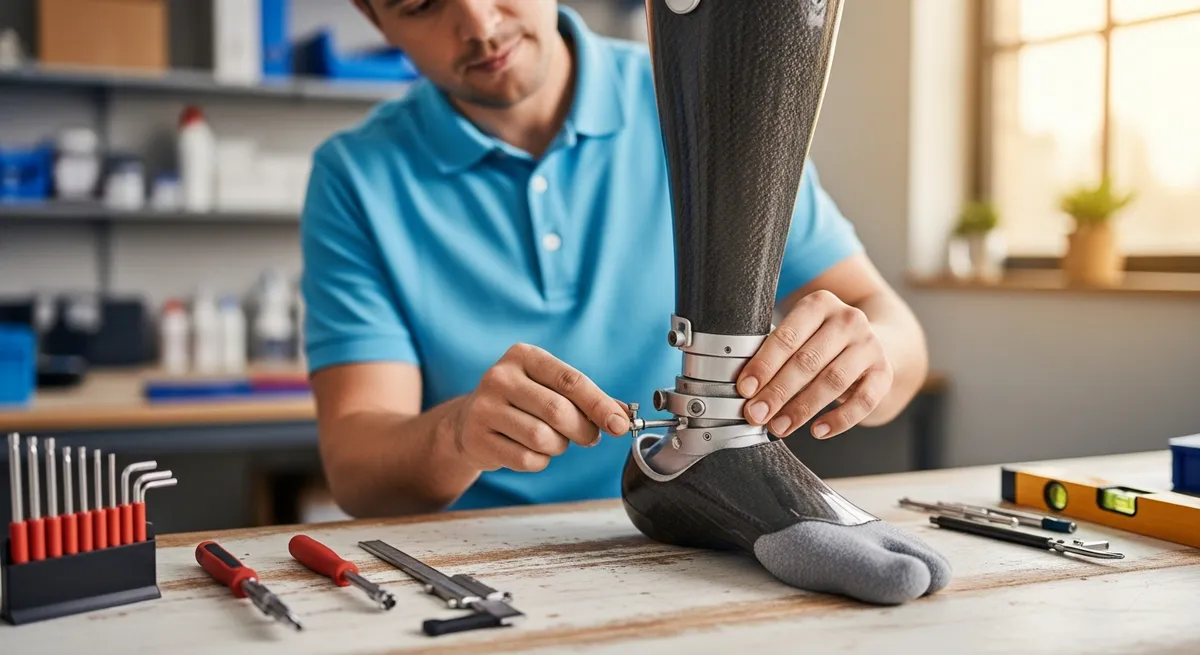
The prosthetics and orthotics field is consolidating: large networks and investor-backed groups keep acquiring clinics across the country. Yet independent, family-owned practices continue to hold something the biggest budgets can't buy — the same clinician, year after year, who knows your limb, your gait, and your goals. Here's what the research says about why that matters, and how independent practices can turn their genuine strengths into a steady flow of new patients.
Ownership Structure Shapes the Care Experience
Skilled, compassionate clinicians work in every kind of practice. But ownership structure creates incentives, and incentives shape the everyday patient experience. Independent practices answer to their patients and their community reputation; investor-owned organizations also answer to financial stakeholders with expectations about margins, productivity, and standardization. Neither motive is illegitimate — but for a lifelong clinical relationship like prosthetic care, the difference is worth understanding.
Peer-reviewed research gives this more than anecdotal weight. A 2023 study in JAMA analyzing Medicare claims found that hospital-acquired adverse events increased 25.4% after private equity acquisition of hospitals, and a separate JAMA analysis found patient care experience scores declined after such acquisitions. These studies examined hospitals — not P&O clinics — and no study indicts any individual organization. But they explain why patients and referring physicians increasingly ask a simple question: who owns my clinic?
Continuity of Care Is the Independent Advantage
Prosthetic care never really ends. Residual limbs change volume, sockets need adjustment, components wear, activity goals evolve. A patient fitted at 45 will still be seeing a prosthetist at 75. Research on prosthetic rehabilitation consistently points to the clinician relationship as central: a qualitative study of prosthetists and lower-limb amputees found trust and shared decision-making at the heart of good rehabilitation, and long-running survey research on prosthetic device satisfaction shows service and follow-up experience drive satisfaction alongside the device itself.
Independent practices are structurally built for continuity. Owner-clinicians don't rotate out; many family practices span generations. When the same prosthetist sees the same patient across a decade, socket problems are solved faster because the clinician already knows the history no chart fully captures. That's not a marketing slogan — it's an operational reality independents should make visible everywhere patients look.
Freedom to Fit From Any Manufacturer
Here's an advantage most patients never hear about: componentry freedom. Manufacturers engineer differently — Össur in bionics and liner systems, Ottobock in microprocessor knees, Blatchford in biomimetic hydraulic design. No single catalog is best for every patient, every K-level, every lifestyle.
Large organizations often standardize purchasing for efficiency — a rational business choice that nonetheless narrows options. Independent practices can source anything, and when their clinicians are trained across manufacturers, they can genuinely match device to patient. We covered the training side in depth in our guide to Össur, Ottobock & Blatchford clinical education. The marketing translation is simple and entirely truthful: "We fit what's right for you, from any manufacturer."
How Visible Is Your Independent Advantage?
Run your practice website through our free AI Readiness Scanner — see in 60 seconds whether patients, referral sources, and AI search engines can find the strengths that set you apart.
Scan My Practice Website Free →The Marketing Playbook for Independent P&O Practices
Independent practices don't need to disparage anyone to win — they need to make their genuine strengths impossible to miss. Five moves, in priority order:
- Tell your ownership story on your homepage. "Clinician-owned" or "family-owned since [year]" is a differentiator no network can copy. Put it in your hero section, your Google Business Profile description, and your about page.
- Publish credentialed clinician bios. Names, faces, years at the practice, ABC certifications, manufacturer training. Continuity is only persuasive when patients can see who they'll be seeing — for years.
- Own local and AI search. Patients search "prosthetics near me" and increasingly ask ChatGPT and Perplexity who to trust. Structured data, consistent citations, and authoritative content decide who gets recommended. Our SEO, GEO & AEO services are built for exactly this.
- Convert loyalty into reviews. Independent practices have the most loyal patients in healthcare — but loyalty invisible to Google might as well not exist. A permission-based review system that encourages patients to mention their clinician by name compounds year over year.
- Equip your referral sources. Physiatrists, vascular surgeons, and PTs decide where patients go first. Expertise-forward referral pages and materials — aligned with organizations like AOPA and the Amputee Coalition's patient-education standards — keep your practice top of mind.
This is the system we build in our prosthetics & orthotics marketing program — positioning independents on strengths that are true, verifiable, and durable.
You don't have to say a word about the big chains. You just have to make sure that when a patient asks "who will actually know me?", the answer they find is you.